
Ensuring Zero-Accident Operations with Modern Lift Safety Devices
Lift safety devices represent the most critical layer of engineering in modern building management. These systems protect passengers from mechanical failures and provide peace of mind during daily travel. High-quality components ensure that vertical transportation remains the safest form of travel in the world. Guiding the elevator industry since 1977, Merih Asansör is one of Turkey’s leading manufacturers of automatic doors, cabins, and complete elevator systems, distinguished by over 40 years of profound experience, a robust R&D infrastructure, and a 100% domestic production approach. Operating within a 30,000-square-meter state-of-the-art facility with an annual production capacity of 100,000 doors and 5,000 cabins, the company exports its quality, reliability, and innovation-driven solutions to more than 65 countries, successfully representing Turkey’s engineering power in the global market.
Engineers design elevator safety equipment to handle extreme forces. These parts stay dormant during normal operation but react instantly when they detect a problem. For example, the overspeed governor monitors the car speed every second. If the car moves too fast, the governor triggers the safety gear. This mechanical reaction stops the car by gripping the guide rails. Because these systems operate independently of the main power, they offer a final line of defense. Reliable manufacturers prioritize high-grade materials like hardened steel for these components. This choice ensures the hardware survives the friction and heat of an emergency stop.
Light Curtains and Presence Sensors in Lift Safety Devices
Light curtains act as invisible barriers across the elevator entrance. Instead of old-fashioned mechanical bars, these devices use dozens of infrared beams to scan the doorway. When an object breaks a single beam, the door controller stops the closing cycle. This technology prevents the doors from striking passengers or pets. Because the detection happens without physical contact, it reduces the mechanical stress on the elevator door operator. This leads to fewer repairs and longer life for the door panels.
Advanced 3D presence sensors take this protection further. While a standard light curtain only sees the space between the doors, a 3D sensor monitors the hallway. When a person walks toward the lift, the sensor detects the movement and holds the door open. This feature helps people with strollers or wheelchairs enter safely. Instead of rushing to beat the timer, passengers can enter at their own pace. Modern sensors ignore stationary objects like plants or nearby walls. This intelligence prevents the doors from staying open unnecessarily, which maintains the building’s traffic flow.
Installing high-density infrared sensors improves the user experience in busy commercial buildings. These units operate in a wide range of temperatures and light levels. Because they use digital filtering, they do not react to camera flashes or bright sunlight. For this reason, property owners choose these devices to minimize liability. A single accident at the entrance can lead to costly legal issues. Investing in top-tier door safety sensors eliminates this risk. These components form a core part of the EN 81-20 safety standards required for modern installations.
Emergency Power Supply and ARD as Critical Lift Safety Devices
The Automatic Rescue Device (ARD) provides a solution for one of the most common fears: getting stuck during a blackout. When the building loses power, the ARD system takes control. It uses a dedicated battery bank to supply energy to the control panel and the motor. The device then moves the lift car to the nearest floor and opens the doors. So, passengers exit safely within seconds of the power failure. This automation removes the stress of waiting for a rescue team or a technician.
Modern elevator rescue units use smart power management to ensure readiness. These batteries undergo regular self-tests to verify their charge levels. If the system detects a weak battery, it sends a signal to the maintenance team. Because the ARD only operates in emergencies, the batteries last for several years. High-performance units can move even heavy freight elevators by calculating the most efficient direction of travel. Instead of fighting gravity, the system chooses the direction that requires the least torque. This logic protects the mechanical parts from overheating during the rescue.
Integrating an Emergency Power Supply also keeps the cabin lights and alarm systems active. Communication remains the most important factor in passenger comfort. When the lights stay on and the intercom works, people remain calm. For this reason, hospitals and high-rise offices treat the ARD as a mandatory component. It ensures that critical transport continues even when the local grid fails. Using a reliable rescue device made in Türkiye provides a cost-effective way to meet international safety codes while ensuring long-term durability.
How Lift Safety Devices Protect Maintenance Personnel
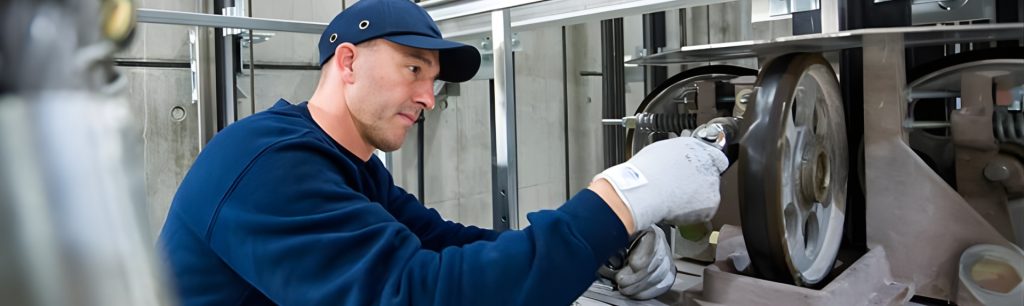
Maintenance personnel work in high-risk environments like the elevator pit or the car roof. Specific technician safety devices exist to prevent accidents during inspections. The inspection control box is the primary tool for this task. When a worker switches the lift to “Inspection Mode,” the elevator ignores hall calls. The car then moves at a much slower speed under the direct control of the technician. This allows the worker to check the hoist ropes and guide rails without the risk of sudden, fast movements.
Pit safety involves more than just a control switch. Pit stop buttons allow a worker to cut power to the motor instantly from the bottom of the shaft. Meanwhile, safety buffers provide a physical survival space. If the car descends too far, these buffers absorb the impact and stop the cabin before it hits the floor. Modern systems also include electronic sensors that monitor the position of the technician. Because these sensors link to the main controller, the lift will not move if it detects a person in a dangerous zone.
Safety also depends on the overspeed governor and safety gear during maintenance tests. Technicians often trigger these devices manually to ensure they work correctly. This routine check proves the mechanical jaws can still grip the rails with enough force. Proper shaft lighting and clear communication devices also support a safe working environment. Manufacturers focus on these details to reduce workplace injuries. Because a safe technician provides better service, these devices indirectly improve the reliability of the entire building’s transport system.
Comparing Passive and Active Lift Safety Devices for Performance
Passive safety devices provide protection without needing a power source or a signal. Elevator buffers are the perfect example of this technology. These heavy-duty components sit at the bottom of the hoistway. Polyurethane buffers use material compression to stop low-speed lifts. Oil-filled hydraulic buffers handle the high energy of high-rise elevators. Because they rely on physics, they never fail due to a software bug. They stay ready for years, waiting to absorb a potential impact.
Active safety devices monitor the system’s status in real-time. These include the load weighing sensor, the limit switches, and the digital speed encoder. The load sensor prevents the car from moving if it exceeds the weight limit. So, the motor never faces a strain it cannot handle. The limit switches act as digital fences. When the car reaches the top or bottom floor, these switches cut the power to prevent a collision with the building structure. Because these devices talk to the computer, they can trigger a stop before a mechanical failure happens.
Performance comes from the synergy between these two categories. Active systems prevent the elevator from entering a dangerous state. Passive systems provide a final physical stop if the active systems fail. This redundant design is why elevators remain so safe. Manufacturers test these parts under extreme conditions to meet CE certification and ISO 9001 standards. When building owners choose high-performance lift parts, they look for this balance. Combining smart electronics with rugged mechanical hardware creates a vertical transport system that lasts for decades.
Repair and Calibration Of Electronic Lift Safety Devices
Electronic lift safety requires regular attention to stay accurate. Over time, environmental factors like dust or vibrations can affect sensor performance. Technicians must perform safety device calibration to keep the response times within legal limits. For example, the load weighing device needs recalibration if the cabin undergoes a renovation. If the car gets a new floor or mirrors, its empty weight changes. The sensor must learn this new “zero” point to measure the passenger load correctly.
Cleaning the lenses on light curtains is a simple but vital task. Dust buildup can scatter the infrared beams, leading to false triggers. When this happens, the doors might cycle repeatedly without a person being there. This causes frustration for users and wears out the door motor. Regular inspections also involve checking the wiring for the safety circuit. Because this circuit runs through the entire shaft, a loose connection in one floor can stop the whole lift. Technicians use multimeters to find these hidden faults before they cause a total breakdown.
Safety gear adjustment ensures the mechanical jaws sit at the perfect distance from the rail. If the gap is too small, the car might vibrate or make noise. If the gap is too large, the stopping distance becomes dangerously long. Professionals use feeler gauges to set these tolerances according to the manufacturer’s specs. They also check the tension of the governor rope. Because this rope drives the safety system, it must not slip. Consistent maintenance and calibration turn a collection of parts into a reliable safety network. This professional approach protects the building’s investment and ensures the safety of every passenger.